Pilot
fasttasks
«Let's get to the point.»
- Driver
- control, results
- Fear
- wasting time, losing control
- What to do
- move fast, be direct, respect the clock
The same buyer is an easy meeting for one salesperson and an uphill climb for another. AllyWise starts from your own profile and the public traces of your next customer, then tells you how to open, what language to use and what to avoid — calibrated on the pair, not on one side of it.
Full 15-day trial. No freemium.
Fifteen days with the whole product, not a cut-down version. There is no perpetual free tier because a sales method is judged on real deals, not on a trial that never ends.
The tools that promise to help you understand your customer work on one person: the buyer. But nobody sells in the abstract. You sell, to them, with the history you both bring into the room.
A salesperson walks into a first meeting with a name, a LinkedIn profile and fifteen minutes of research. Tone, framing, topics: they're guesswork. And the gap in results between two people on the same team, with the same product and the same price list, stays enormous — largely because one of them reads the relationship faster than the other.
That reading isn't a mysterious talent. It's a skill senior closers accumulated across twenty years of meetings, and no CRM records it, because a CRM records deal status rather than what the salesperson learned. When the senior leaves, it leaves with them.
The right move depends on the pair, not on either profile alone.
Guiding principle of the TANDEM method
Four archetypes generated by two Big Five axes, plus three continuous regulators. Names you remember, categories you actually use in the car before a call.
«Let's get to the point.»
«Let me tell you something.»
«Could you send me the documentation?»
«How would my team experience this?»
The archetype sets the course. The Regulators set the volume: how much novelty against how much proof, how much structure against how much lightness, how much reassurance against how much boldness.
How much weight to give what others have already done versus what's new. Low: cases, references, industry standards. High: anticipation, vision, the advantage of getting there first.
How much scaffolding they want around the conversation. High: agenda sent ahead, a document, numbered steps. Low: a conversation that gets to the point without ceremony.
How much they need the risk covered before moving. High: guarantees, phases, ways out. Low: tolerates uncertainty when the opportunity is good. Corresponds to inverted Neuroticism.
The salesperson covers about 70% of the style distance. Not all of it: imitation ends up sounding false, and the mismatch between how you speak and who you are registers before any content does. And what adapts is form and sequence — never the facts.
Being alike makes rapport easy and can sabotage the decision. Two Promoters enjoy each other and never sign. Two Architects spiral into analysis. Knowing you're in a mirror is half the work.
A one-page document, not a dashboard. Every line is a move you can execute, not a figure you have to interpret.
You (Promoter) are meeting an Architect. Open with structure and documentation: your natural energy will read as noise unless it's anchored to evidence. With him the relationship follows the proof rather than preceding it.
«Marco, I've put together a twenty-minute walkthrough of how we handled the same problem at a comparable company, with the numbers. Shall we go through it, or would you rather start from your questions?»
«I sent you two pages yesterday with the integration architecture and the measured timings. If you've read them, I'd start from the points that convinced you least.»
«I read your piece on integrating legacy systems. That's exactly the scenario we get pulled into: let me show you how, then tell me where it doesn't hold.»
Illustrative example. The brief is generated on the pair: the same counterpart, read by a salesperson with a different archetype, produces different openings.
We say them first, because they're the first four you'd ask about — and because a product that can't say what it doesn't do usually doesn't know what it does either.
We don't replace HubSpot, Pipedrive or Salesforce, and we don't ask you to migrate anything. The CRM keeps the record of deals; we prepare the conversation. Two different jobs, two different tools.
We don't produce a judgement about the person across the table. We produce a hypothesis about how it's worth communicating with them — stated as a hypothesis, with an explicit confidence level and the sources in plain sight. The distinction isn't cosmetic: it's the legal and ethical perimeter of the product.
There's no bot joining your meetings. We can read a transcript if you choose to give us one, with the consent of the people who were there. By default we listen to nothing.
Any general-purpose model writes emails automatically, for free. Our job is to tell you what to say to this person and why — the text is the consequence, not the product.
Profiling people in Europe is a regulated activity. Having designed for that from the start, rather than chasing it afterwards, is why your DPO doesn't block us — and one reason an Italian product holds up where a casual American tool doesn't.
Our servers never access LinkedIn. The content comes from the page you're already looking at, with you in the middle. And we don't rebuild a database of profiles: that isn't our business model.
Your counterpart's profile is a passing input, not an archive. What we store is your own profile, which is half the pair and belongs to you.
Health, political, religious or philosophical beliefs, trade union membership, sexual orientation, ethnicity. The system doesn't infer them, doesn't display them and doesn't retain them — enforced on the way in, in the model's instructions, and on the way out.
No automated decision about your counterpart, no score anyone is subjected to. And no emotion recognition: at work it's prohibited under the AI Act, and it isn't a feature we lack — it's a feature we removed.
We don't qualify by headcount or contract value. We qualify by how much the relationship weighs on the outcome. What matters is how many of these five describe your deals.
We give this the same prominence as the rest, because selling you a tool that moves nothing in your context is a loss for both of us.
Gartner estimates that by 2027, 95% of seller research workflows will begin with AI, up from under 20% in 2024. That's good news and a problem: when everyone arrives prepared on the same public data, preparation stops being an advantage.
What stays scarce is reading the relationship — understanding who you're talking to and how it's worth talking to them. It's the last skill to be standardised, and it's exactly the one the TANDEM method tries to make systematic instead of leaving it to the intuition of whoever happens to have it.
Source: Gartner, forecast on seller research workflows to 2027
There's no first-line support. If you write, one of the two of us answers.
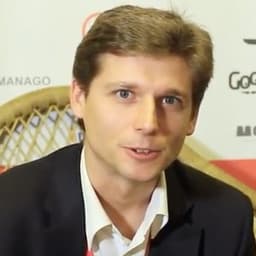
More than ten years in management roles across digital marketing and lead generation. Led business development and SaaS product positioning for the Lead Champion brand; before that, CEO of ADChange S.r.l., managing its spin-off through to its acquisition by Neosperience S.p.A. Author of TANDEM, the framework AllyWise is built on.
LinkedIn
Full stack developer. Has moved monolithic applications to serverless architectures on AWS — Lambda, CDK, API Gateway — working in Go, Java, Python and React, with experience in distributed systems, networking and IoT monitoring.
LinkedInAlly S.r.l. · innovative startup · Turin, Italy · incorporated June 2026
Full access, free for the duration of the beta. In exchange we ask three things: a half-hour check-in each week, the discipline to tell us after every meeting whether the brief anticipated what you found, and — only if the value is genuinely there — a testimonial with your name on it.
If it turns out you don't need it after the beta, you tell us and that's that. It's the kind of answer we need more than a lukewarm customer.
Let's talk